
Room II
The Iron Lung
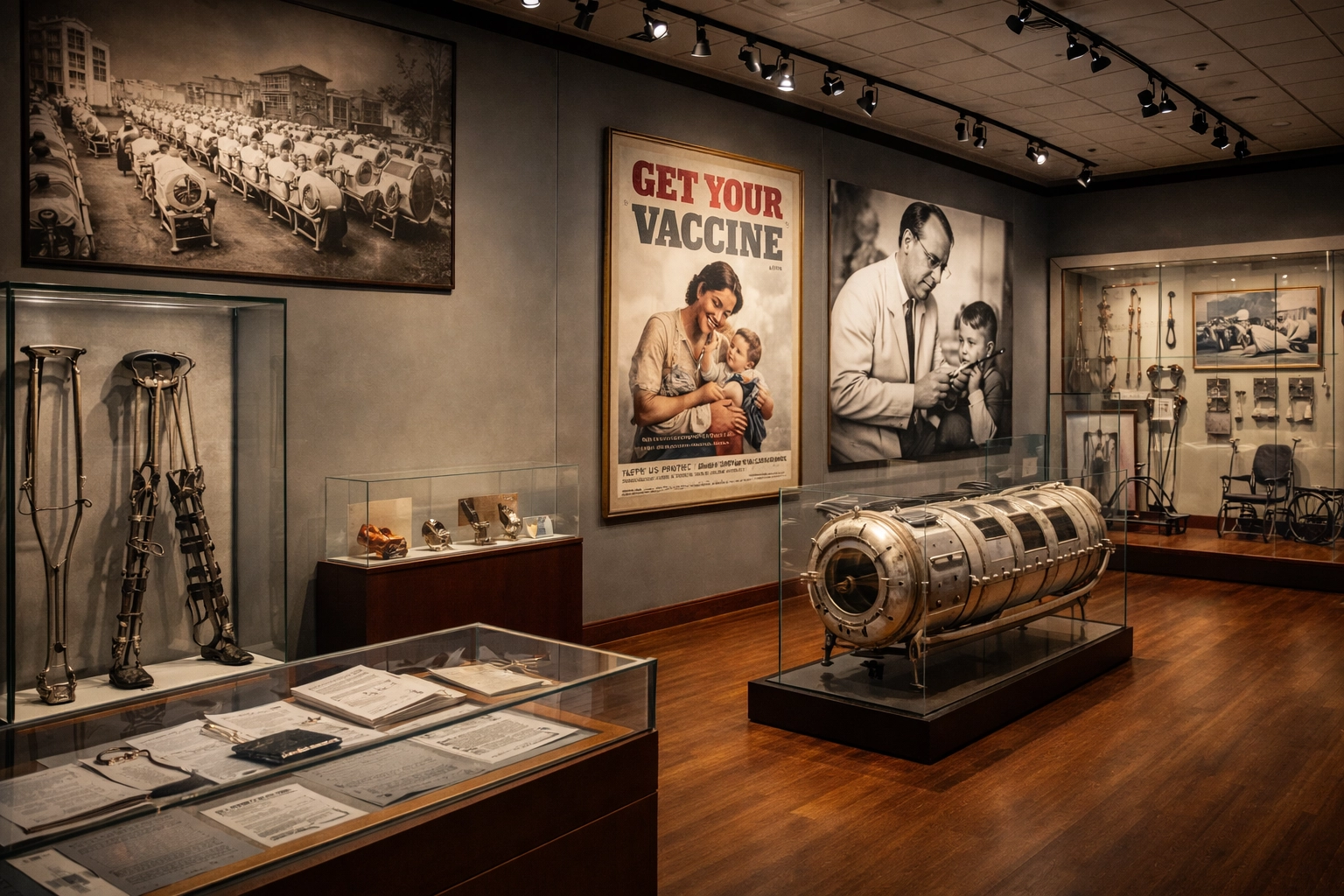
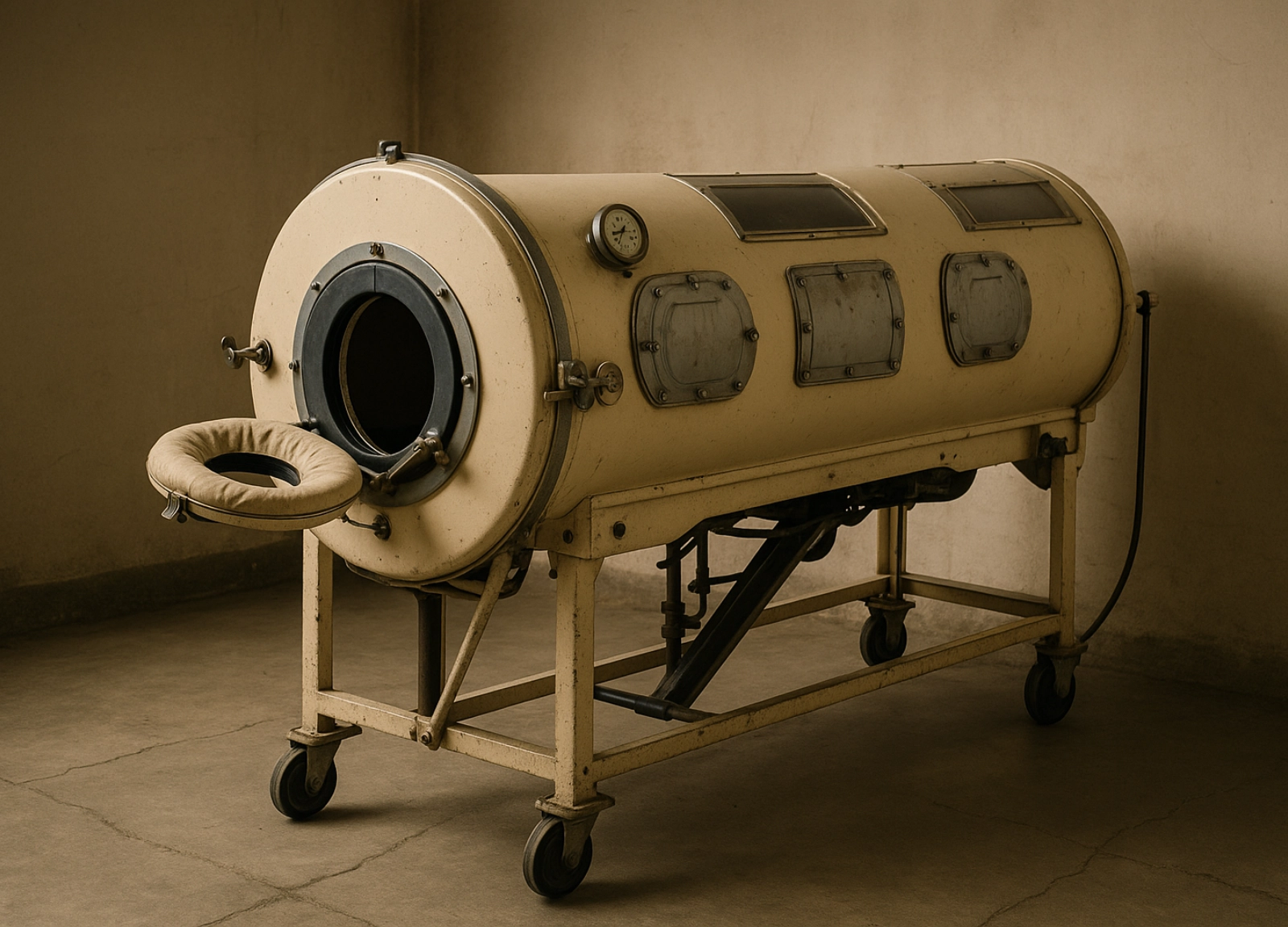
No machine came to embody the polio era more than this one — a great steel cylinder that breathed for those whose own lungs no longer could. It saved lives, and it became the most haunting image of the disease.
What it was
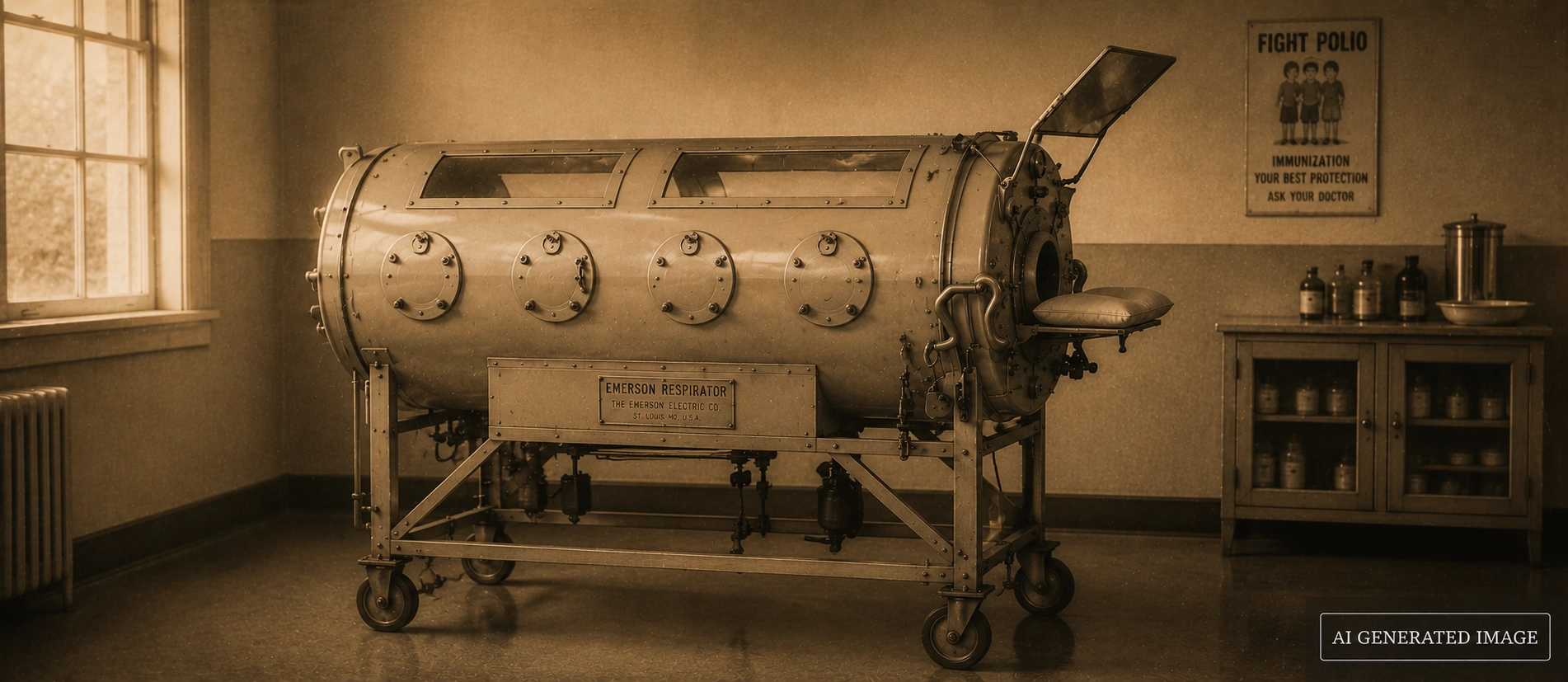
When polio paralysed the muscles that power breathing, the iron lung breathed in their place. The patient lay sealed inside an airtight steel chamber, only the head exposed. As the pressure inside the cylinder rose and fell, air was drawn into the lungs and pushed out again — a machine mimicking the body's own breath, hour after hour, without pause.
Life inside
For some it was a matter of days; for others, months, years, even a lifetime. A mirror angled above the head let patients see the room behind them — visitors, nurses, a world just out of reach. They learned to eat, speak, sleep and dream within the steady rhythm of the machine. The iron lung kept them alive, but it also held them still.
To breathe is the one thing we never think about — until a machine must do it for us.
The legacy
Today the iron lung survives mostly in museums and photographs — rows of silent cylinders that once hummed day and night. It endures as the defining image of polio: proof of how far medicine reached to keep people alive, and of the vaccines that finally made it unnecessary. A small number of survivors depended on these machines for the rest of their lives, long after the wards had emptied — a quiet reminder that for some, the polio era never truly ended.
Continue your visit
Room III — Voices of Survivors