Room VI · The Vaccine
The Day the
Fear Ended
How a drop on a sugar cube emptied the wards
Everything in the five rooms before this one belongs to a world without a vaccine — a world where every summer brought closed swimming pools, shuttered cinemas and parents counting their children’s steps. This room is about the moment that world began to end.
Opening the Window
Every summer brought the same rituals.
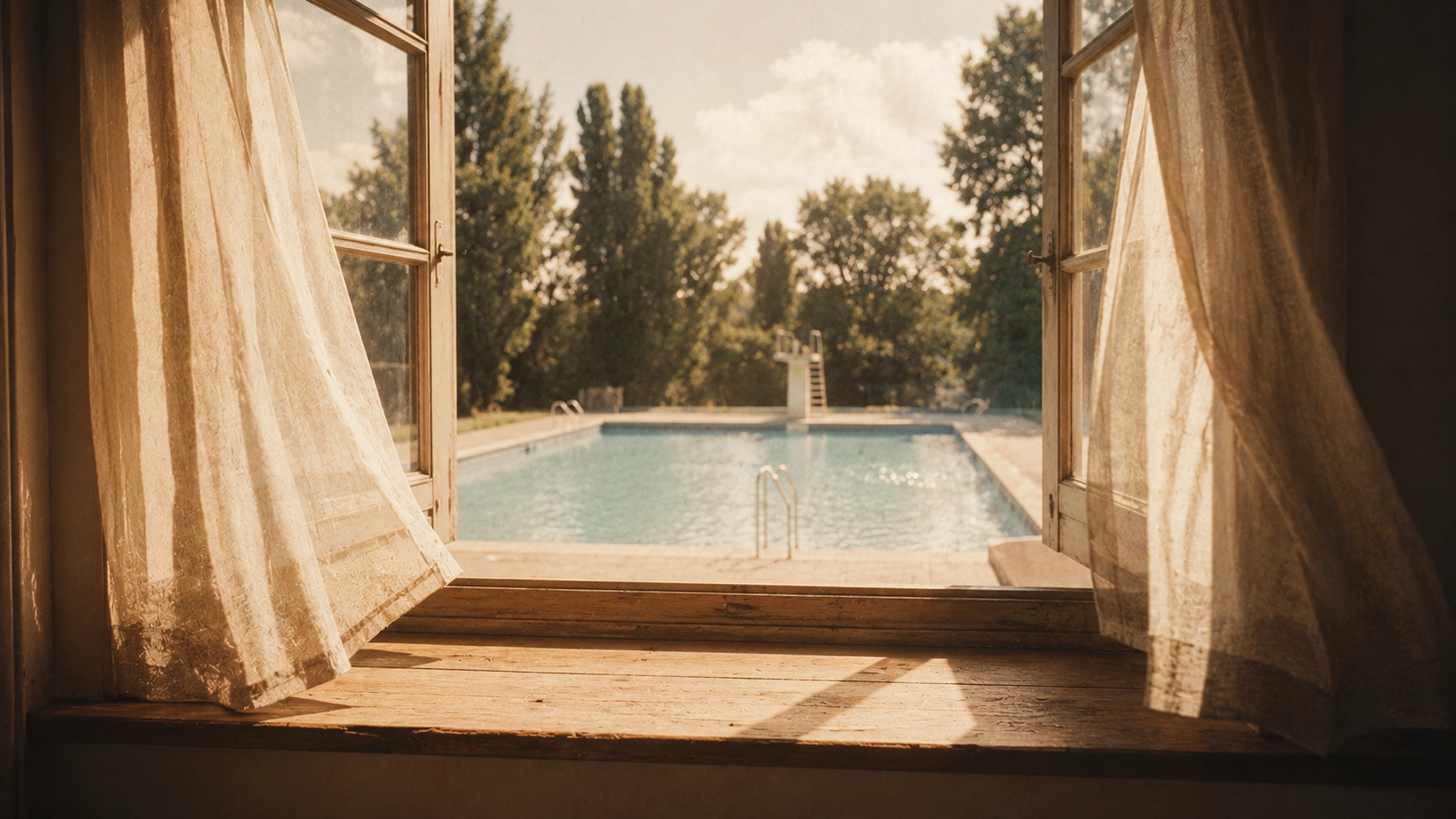
Parents kept children away from swimming pools. Cinema seats stayed empty. Birthday parties were postponed. Streets fell quiet. Some houses carried quarantine notices on their doors. Families tried home remedies handed down by neighbours or grandparents. Windows were opened. Windows were closed. Travel plans were cancelled. Children were told to stay inside until autumn.
None of it offered certainty.
No one knew which child would fall ill or which street would be spared. There was no medicine to stop the disease once it had begun. For many families, the only plan was to wait for the heat to pass and hope that September would arrive without an ambulance at the door.
Then came one number that people remembered.
1.8 million
The results were announced on 12 April 1955.
For most people, that day was not about laboratories or scientific papers. It was about ordinary things that suddenly seemed possible again. For many families, it became possible to imagine a summer that no longer revolved entirely around fear.
Fear did not disappear in a single morning. Vaccination programmes still had to begin. Trust had to be earned. Children still had to be protected one by one.
But something fundamental had changed.
For the first time, waiting was no longer the only thing families could do.
The object that carried that hope looked almost disappointingly ordinary.
A small glass vial. A glass syringe.

The Vaccine That Travelled
The scientific question had not disappeared with the first successful vaccine.
Many researchers had argued that a live, weakened virus would provide broader and longer-lasting protection than one that had been inactivated. Albert Sabin devoted his work to that approach. Instead of being injected, the vaccine was swallowed. The weakened virus could no longer cause polio in healthy recipients under normal circumstances, but it still allowed the body to recognise and respond to the real virus if it was encountered later.
The debate was no longer confined to laboratories.
It was answered in villages, schools and neighbourhoods, one child at a time.
The difference was practical as much as scientific.
The vaccine did not require a syringe. It did not depend on a clinic or an examination room. It could be given wherever people gathered. A folding table beneath a tree. A classroom. A church hall. A market square. Volunteers could carry it into places where hospitals were distant and doctors were few.
For families, this changed the experience of vaccination. Instead of travelling long distances and waiting for an appointment, they joined a queue with neighbours and friends. Children stood patiently in the sun. Parents watched them step forward, receive a few drops by mouth, and move on. The line kept moving. By the end of the day, an entire community could have been reached.
The vaccine also made it possible to interrupt the spread of the virus in ways that were difficult to achieve with injections alone. In many countries, it became the practical choice for large community vaccination campaigns.
The two vaccines were never opposites in a simple sense.
Each answered a different need.
And for decades, scenes like this were repeated again and again.
A table.
A queue.
Children waiting in the sun.
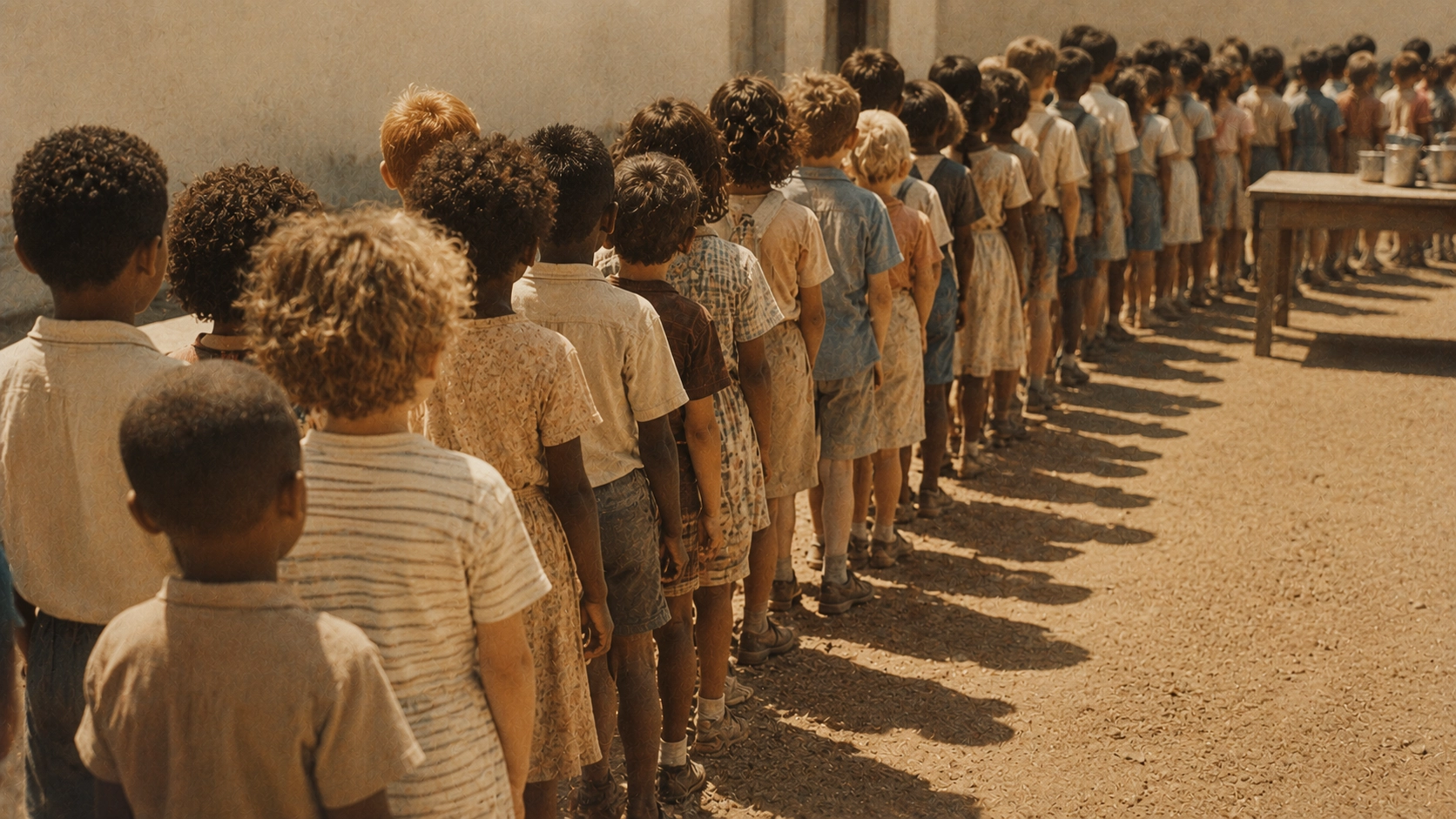
The line stretched far beyond a single village, a single country, or a single generation. From place to place, it kept moving forward, carrying with it the possibility that one day the disease itself might finally disappear.
Carrying Hope
In 1988, the World Health Assembly made an extraordinary decision.
Polio was still endemic in more than 125 countries. The goal was no longer to reduce the disease or control it. It was to remove wild poliovirus from the world entirely. Only one human disease had ever been eradicated before: smallpox.
The decision was simple. The work was not.
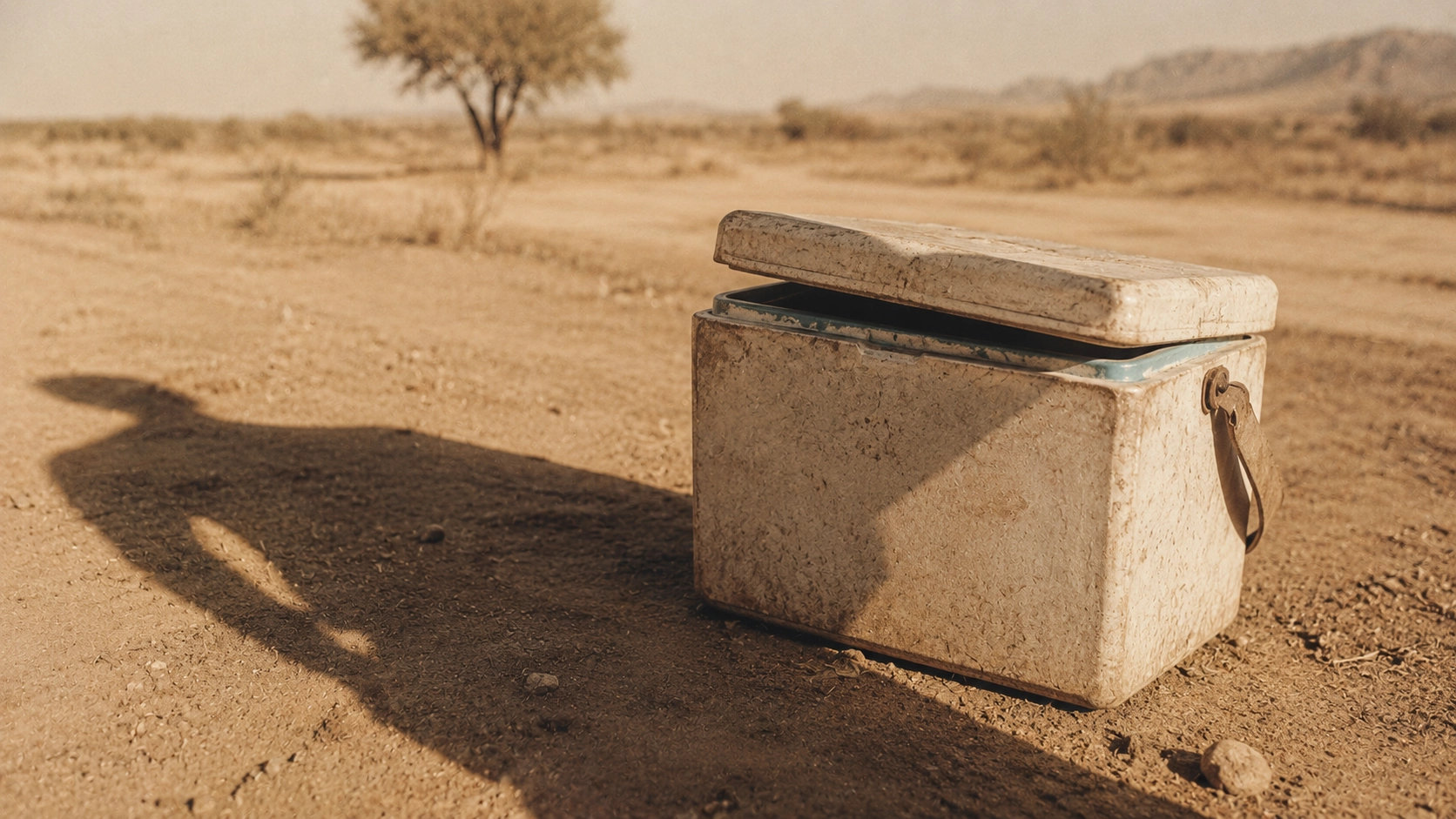
It depended on people carrying vaccine where roads ended and maps became uncertain. Cooler boxes travelled by bicycle, canoe, camel, motorcycle and on foot. Ice packs had to stay cold through long days in the heat. Volunteers crossed rivers, climbed mountain paths and walked from house to house with handwritten registers tucked beneath their arms. In villages without reliable electricity, every journey had to be carefully planned before the ice melted.
Some days began before sunrise.
A table was unfolded in a school yard. Another stood beside a market. Another beneath the shade of a tree. Parents arrived carrying children. Older brothers and sisters waited patiently in line. At the end of the day, the table was packed away and carried to the next village.
In other places, the work demanded something even more difficult.
Temporary pauses in fighting were negotiated so that vaccination teams could pass safely and children could be reached. For a brief time, roads that had been closed became open again, not for soldiers or supplies, but for families.
The results accumulated slowly.
Since 1988, cases caused by wild poliovirus have fallen by more than 99 per cent. Two of the three wild poliovirus types have been certified as eradicated. In only a very small number of places has wild poliovirus transmission never been interrupted.
The work, however, is not complete.
Wild poliovirus still survives in limited areas. Outbreaks caused by circulating vaccine-derived polioviruses continue to occur where too few children are immunised, echoing the rare risk described earlier in this room. These are different problems, but they share the same lesson. Protection depends on reaching every community, not only most of them.
The story of polio did not end when the epidemics faded.
For millions of people, it was only beginning.
After the Summer
The vaccine arrived too late for those who had already lived through polio.
The epidemics ended. What they had left behind did not.
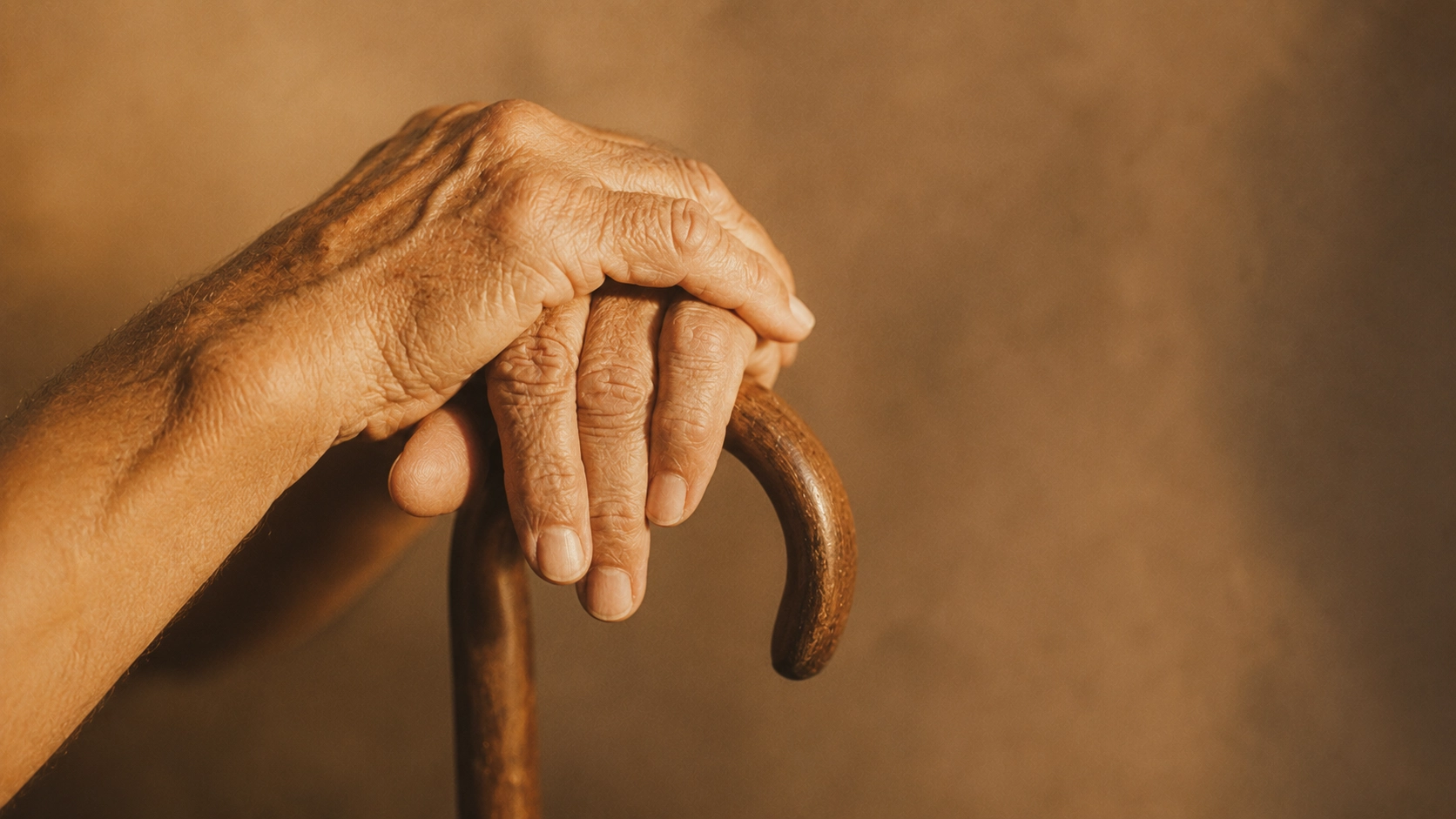
Children who had worn callipers learned to walk with them. Others learned different ways to move through the world. They went to school. They found work. They married, raised families, built careers, and grew old. Their bodies had been shaped by an illness that had lasted only days or weeks, but whose effects remained for a lifetime.
Many of those children are now elderly.
For some, the story did not remain where they had left it. Decades after what seemed to be recovery, new weakness, fatigue and pain appeared. The condition became known as post-polio syndrome. It does not affect every survivor, and it does not follow the same course for everyone. But for many, it arrived after a lifetime spent believing that polio belonged only to childhood.
There is a quiet irony in this.
The success of vaccination is one reason why so many survivors became invisible. A disease that almost disappeared from everyday life also disappeared from everyday memory. Doctors trained long after the epidemics may never have cared for someone who survived paralytic polio. Weakness may be mistaken for ordinary ageing. New symptoms may be understood only after a survivor explains an illness that was once known by every family and is now unfamiliar to many.
This is not a failure of remembrance. It is one consequence of success.
Yet the lives of those who survived remain part of the history of polio. Not because they represent the past, but because they show what the disease could do before prevention became possible. Their lives are not a footnote to the story of vaccination. They are the reason that story matters.
This museum exists because history is carried by people as much as by objects. The photographs, documents and machines tell only part of the story. The rest lives in memory, in families, and in the voices of those who were there.
If you have walked through these rooms as a survivor, or alongside one, we invite you to continue with those voices.
And if part of this history is also yours, there is still room for your story here.